

Updates for one year, unlimited sites, auto updates, and regular updates.
$3.99
 BookmarkBookmarked
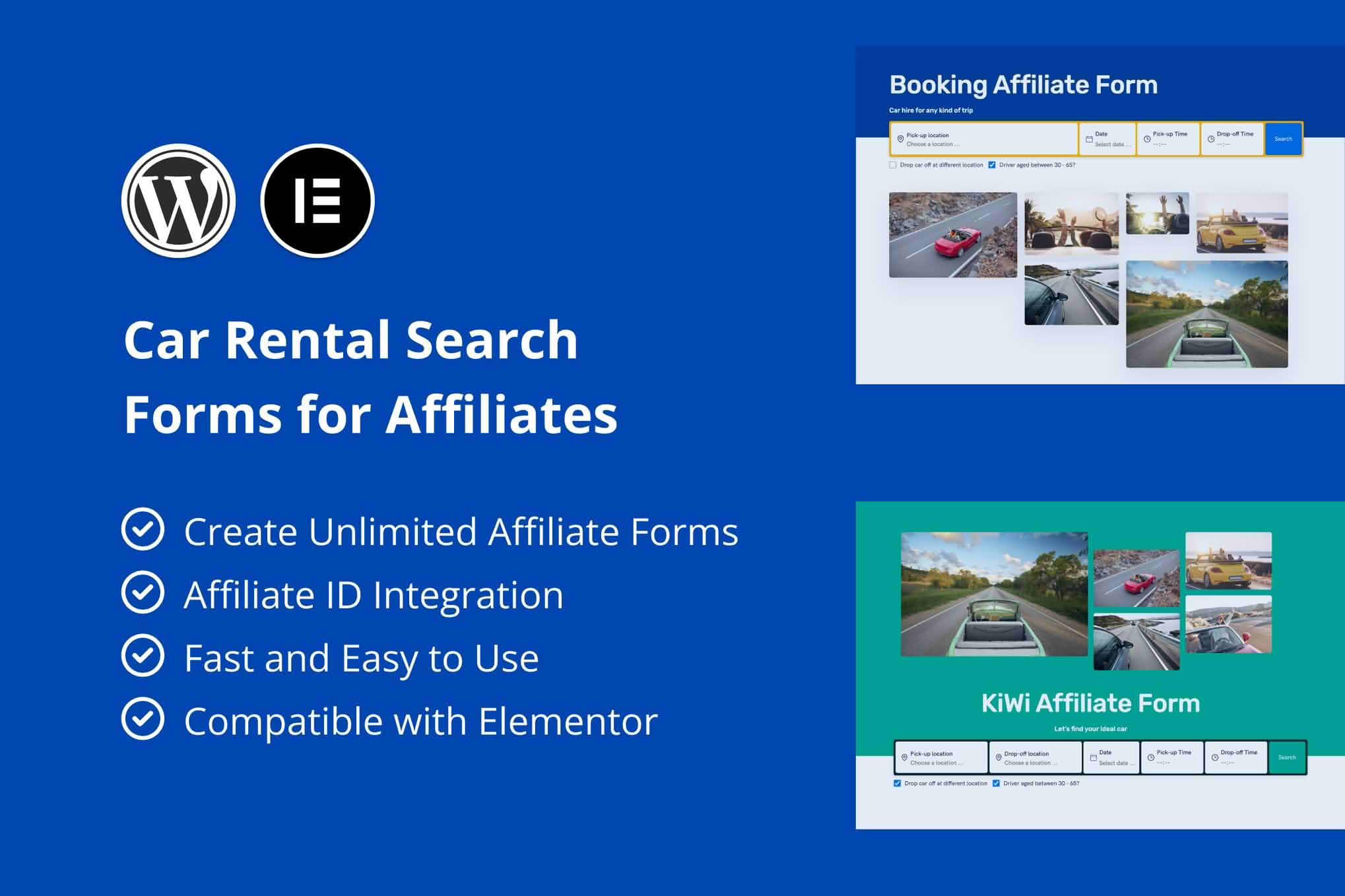
Car rental searches fit naturally into travel content. A reader planning a road trip, a business visit, or a family holiday often reaches the point where they want to check rental cars straight away. Car Rental Search Forms for Affiliates adds a search form at that moment, so visitors can start looking for a rental car from the page they are already reading. For site owners taking part in affiliate programmes, the bookings that follow those searches can generate referral commission.
At its simplest, the product adds car rental search forms to your site. A visitor enters the details of the search they want to run, right where they are reading. The purpose is to shorten the distance between inspiration and action. Someone who has just finished a guide to a coastal city can begin checking vehicles without leaving the page to start a fresh search somewhere else.
Search forms work best when they feel like a natural part of the surrounding content. A visitor who has just read about a scenic drive or an airport transfer is already thinking about transport. Placing a rental car search at that point respects the reader’s intent, instead of interrupting the article with an unrelated advertisement.
Travel blogs, destination guides, and local tourism websites tend to attract readers who are weighing options for an upcoming trip. Many of those readers will need a car, whether they intend to explore rural areas, visit relatives, or move between cities. A car rental search form therefore suits pages about road trips, regional itineraries, airport arrivals, or neighbourhoods that are difficult to reach by public transport.
Business sites can benefit too. A consultancy that regularly sends staff to client offices, or a wedding venue that welcomes guests from out of town, might decide that a rental car search belongs on a travel or contact page. The key is relevance. Choose pages where the search answers the next question a reader is likely to have, and avoid scattering forms across every page of the site.
Affiliate programmes generally connect a visitor to a partner’s booking process and credit the referring site when a qualifying booking is made. The exact tracking method, reporting tools, and commission terms depend on the programme you join, so read its terms carefully before you rely on the income. Many site owners treat referral earnings as one part of a broader income strategy rather than a guaranteed stream.
Because earnings depend on visitors completing bookings, the most useful content is the content that helps readers make confident decisions. Clear guidance about the rental process, honest explanations of what to expect, and a search form placed close to the relevant information all support that goal. Avoid copy that pushes readers toward a booking they do not need, since that tends to damage trust and reduce the chance of a return visit.
Readers should be able to tell when a search form or link forms part of an affiliate arrangement. A brief, plain-language note near the form, or within the surrounding text, makes the relationship clear without disrupting the page. Many site owners also mention affiliate links in a site policy or disclosure page. If you are unsure which rules apply in your country or market, seek advice from someone qualified in advertising and consumer protection.
Start with a short list of pages where a rental car search would genuinely help. For each one, write an introduction that explains why a car matters for that destination or topic. Keep the search form close to that explanation so the connection feels obvious. Readers should understand the purpose of the form before they reach it, which tends to produce more confident searches and fewer abandoned visits.
Think about the questions travellers ask before they book. Common examples include whether a second driver can be added, what documents are needed at the rental desk, and how fuel and mileage arrangements usually work. Answering the questions you can answer accurately, and linking to official sources for the rest, builds credibility. A page that anticipates real concerns is more useful than one that simply asks for a search.
Car rental decisions involve more than the vehicle itself. Pickup and drop-off locations matter, particularly when a trip begins at an airport or ends in a different city from where it started. Driver age requirements and driving requirements can affect whether a particular vehicle is suitable. Insurance cover is also worth explaining in plain language. Writing about these topics helps visitors arrive at the search form already informed.
Seasonal patterns shape demand too. Summer holidays, school breaks, and major local events can make vehicles harder to find at short notice. A short note encouraging readers to search early during busy periods is a practical addition that suits almost any travel page, and it sets realistic expectations before the search begins.
Several familiar mistakes can undermine a car rental search form before it has a chance to work. Placing the form on pages with no clear connection to travel is a frequent error, because it asks readers to switch intent without warning. Overloading a page with several forms creates clutter and can make the main message harder to follow. Burying the disclosure about affiliate links is another error, since readers who discover the arrangement later may trust the page less. Finally, neglecting mobile testing means many visitors may struggle with the form without you ever noticing.
A search form earns its place when the page around it is genuinely helpful. Update destination guides when local transport changes, check that any dates or seasonal advice remain accurate, and remove outdated references promptly. Readers who trust your information are more likely to come back and to act on what they read.
Whatever form you use, check the basics as well. Make sure it can be operated with a keyboard, that its labels are descriptive, and that colour alone does not carry important meaning. Test the page on a phone, since many travel searches begin on small screens. These habits help every visitor, not only those with specific access needs.
Good measurement starts with a simple question: does the form help readers do what they came to do? Look at engagement on pages that contain the form, the time readers spend on those guides, and whether they return to related articles. Compare pages with and without the form where possible, and avoid drawing firm conclusions from a few days of data. Treat the results as prompts for editorial improvement, such as clearer introductions or better timing for the form, rather than as proof of earnings. Honest measurement keeps expectations realistic and helps you invest effort where it makes the greatest difference.
This product suits travel publishers, destination bloggers, local tourism sites, and businesses whose customers regularly need transport. It also fits sites already taking part in affiliate programmes that involve car rentals. If your site has little travel content, the search form may feel out of place, so it is worth building that content first. A thoughtful match between audience and purpose makes the difference between a form that gets used and one that is ignored.
Begin by deciding which pages will host the search form and what each one should say before the form appears. Once you have chosen the placements, work through the setup on a staging copy so you can see how the form sits next to your existing layout. Review each page on desktop and mobile, then publish the changes to the live site once they look right.
After launch, keep an eye on how readers use the pages. Look at which destinations attract the most interest, which articles lead to searches, and where readers seem to leave. Use those observations to refine the surrounding content rather than chasing short-term results. A well-written guide with a relevant search form becomes a steady asset, and its value grows as you improve it.


