

Updates for one year, unlimited sites, auto updates, and regular updates.
$3.99
 BookmarkBookmarked
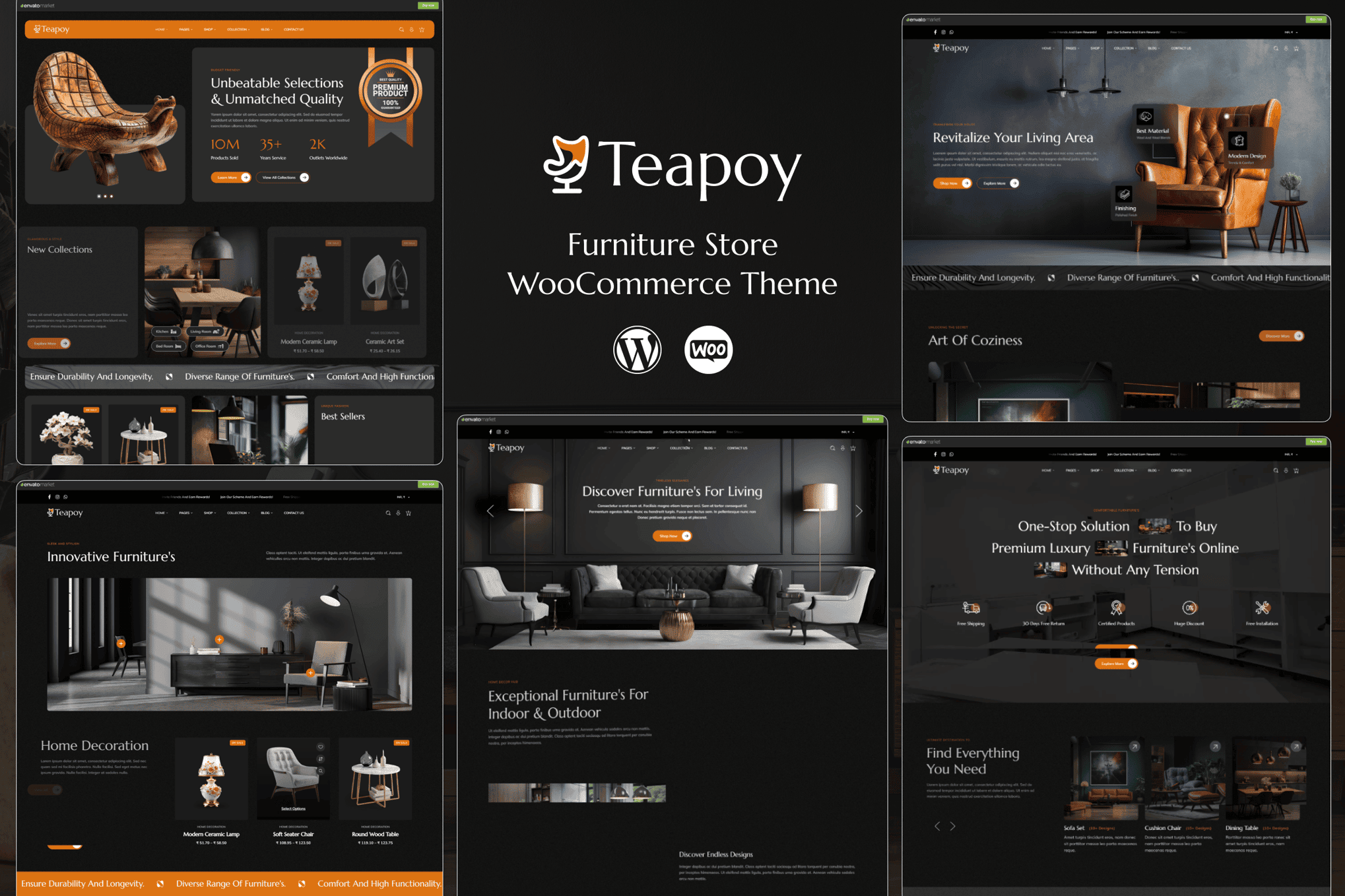
Teapoy is a WooCommerce theme built for furniture retailers and other home-focused online shops. It gives a new store a polished starting point, with pre-designed layouts for the home page and single product screens, so the owner can spend time on the catalog rather than on page structure.
Teapoy is aimed first at stores selling furniture, home decor and accessories. Its layouts are flexible enough for fashion, sport, electronics, footwear, eyewear and grocery shops as well, so the theme is not limited to one product category. Because it is built on WooCommerce, the shop side follows the standard online selling model, and the design work sits on top of that foundation.
The main design assets are the home page and single product layouts. There is a broad selection to choose from, and each can be adapted to the look a store wants, whether that is a showroom-style presentation or a plainer catalog. Slider Revolution sliders can be placed on the home page to highlight collections, and the layouts are responsive, so the same arrangement adjusts to desktop, tablet and phone screens.
Shoppers move through the usual WooCommerce product, cart and checkout pages, so the store behaves the way online customers already expect. The visual layer changes from one store to the next, while the purchasing flow stays familiar.
The clearest match is a furniture retailer that wants to sell its range online, with room for collections and detailed product information. Home decor and accessory shops can use the same structure for smaller items, and the slider can rotate seasonal themes across the home page.
The theme also suits merchants in fashion, sport, electronics, footwear or grocery who want an attractive, shop-ready site. Stores that run promotions regularly will find the slider useful for announcing them, and the contact forms give shoppers a route to ask about stock, delivery or custom orders.
Teapoy works with Elementor and Elementor Pro for page building, WooCommerce for the store, and WPML for multilingual sites. Slider Revolution, Contact Form 7 and YITH WooCommerce Wishlist are also supported, so the usual extras for an online shop can be added alongside the theme. Store-level settings such as payment methods, shipping rules and tax are managed in WooCommerce itself, which keeps the design and the commerce setup separate.
Because pages are built with Elementor, the owner can rearrange sections, swap images, edit text and change slider content from the visual editor. The demo layouts work as starting points that can be reshaped rather than fixed templates, and contact forms can be reworked as needs change.
Catalog changes such as adding products, categories and stock levels are made in WooCommerce, so the visual design and the product data can be updated independently. That separation keeps everyday maintenance manageable for a small team.


