

Updates for one year, unlimited sites, auto updates, and regular updates.
$3.99
 BookmarkBookmarked
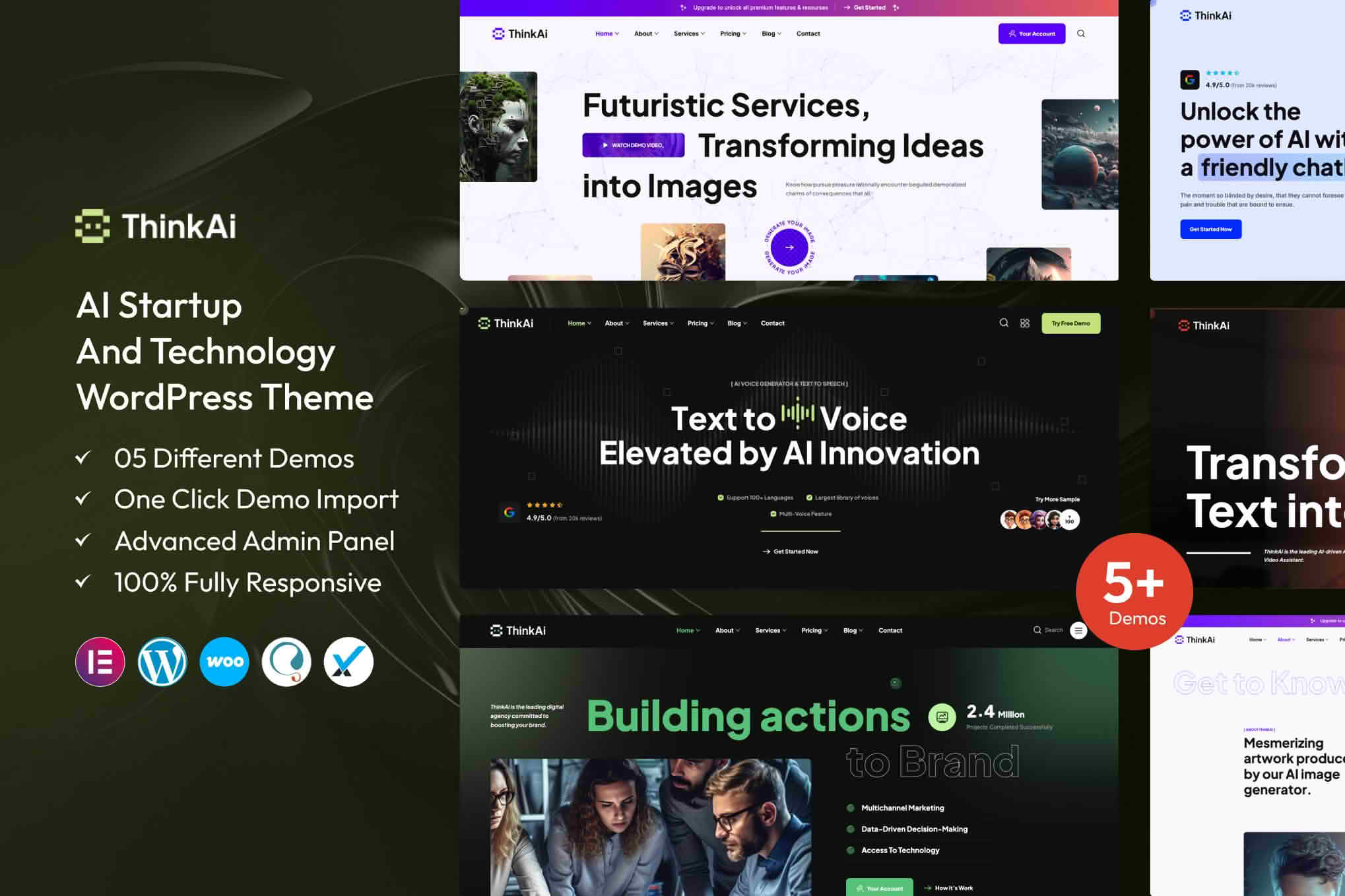
Think AI is a WordPress theme for artificial intelligence startups and technology companies. It combines a modern, forward-looking look with Elementor page building, demo content that can be loaded straight after activation, and a wide choice of layouts for different kinds of tech business.
Think AI is aimed at AI developers, machine learning teams, robotics firms, big data analysts and chatbot builders, as well as SaaS providers, app developers and smart home businesses. The broad audience means it suits a company whose main product is software, a team that combines hardware and software, or a consultancy that explains technology to its clients. Its ready-made demos make it practical for a team that needs a credible site quickly.
The theme ships with five demo layouts, five distinct headers and five distinct footers, so a site owner can combine them rather than accept one fixed style. The default look is modern and precise, with pixel-perfect alignment and a choice of wide or boxed layouts. A full-screen background slider can open a page with a bold visual, and custom page templates let different sections of the site take different structures.
Responsive and retina-ready output keeps the site sharp on phones, tablets and desktop screens. Unlimited sidebars and custom widget areas give the layout room to grow as the company adds content.
AI developers and machine learning teams can use the wide layout and full-screen slider to present a research-led identity, with the demo layouts giving a head start on product, team and contact pages. The custom page templates suit teams that need pages with different structures for different audiences.
Robotics firms and smart home companies can use custom page templates to present different systems or product lines, each with its own structure. SaaS providers and app developers can use widget areas and page templates to organize feature pages, use cases and documentation, which suits businesses with a lot of content to publish.
Because the theme supports unlimited pages and has been tested on Multisite, it also suits a company that runs several related sites from one installation.
Think AI is compatible with Elementor and Bootstrap. It supports WPML for multilingual sites and Contact Form 7 for forms. Google web fonts can be chosen through the theme options panel. The theme looks consistent across the major browsers and adapts to desktop, tablet and phone screens.
Customization is handled through the theme options panel, Elementor and custom CSS. Advanced typography options let each site set its own type style, and the custom font feature supports brand typefaces that are not in the Google library. Custom page templates and the child theme make it possible to adjust the structure of individual pages, or the template files behind them, without touching the parent theme.
Because the code is documented and commented, a developer who takes over the site can follow how it is put together. A small team can start with a demo and expand from there.


