

Updates for one year, unlimited sites, auto updates, and regular updates.
$3.99
 BookmarkBookmarked
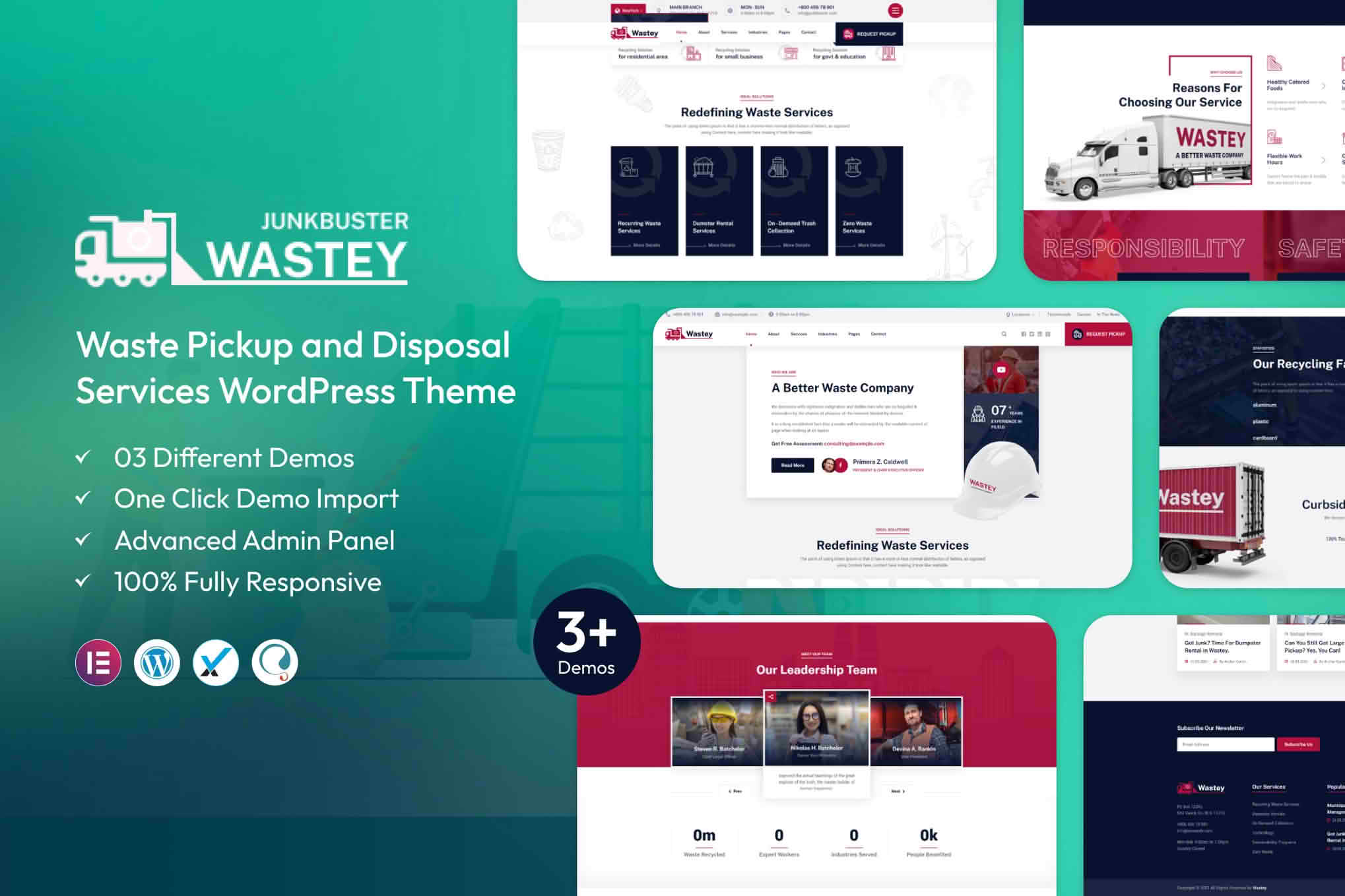
Wastey is a WordPress theme for waste management, recycling and environmental protection companies that want a modern, Elementor-built website. It comes with demo content and a set of built-in Elementor add-ons, so a site can be assembled from ready-made pages and adjusted without writing code.
Wastey is designed for waste management, alternative energy, eco technology and environmental protection companies. It also fits waste collection, trash pickup, disposal, dumpster rental, recycling and solar energy businesses, as well as landscapers and gardeners who want an eco-minded online presence. Its emphasis on Elementor and demo content makes it approachable for owners who want to launch quickly and refine the design over time.
Three different demos are included, and each one can serve as a starting point for a new site. The theme supports wide and boxed layouts, a full-screen background slider, custom page templates and unlimited sidebars. Responsive design and retina-optimised imagery keep the site consistent across phones, laptops and high-density screens. Advanced typography options let you choose from more than 600 Google font families or upload a custom font.
Wastey suits a waste collection firm that needs to explain its pickup process and invite enquiries. An environmental protection company or eco technology business can use the polished layouts to present a corporate image. Landscapers and gardeners who want to show green work can use the theme’s flexible pages to highlight their services. Dumpster rental and recycling businesses will find the same tools useful for presenting services and contact details.
Wastey is compatible with Elementor, WPML, Contact Form 7 and Bootstrap. It has been tested with WordPress multisite, so one installation can run several sites. The theme looks consistent across major browsers, and its documentation includes video guides for setup and customisation.
Wastey gives a lot of room to adjust the site. The Redux-based options panel covers site-wide settings, while custom CSS, custom page templates and custom widgets handle more specific needs. Page-level options let you customise individual layouts, and a child theme is included so template overrides survive updates. Custom fonts can be uploaded, so a brand can use its own typeface alongside the Google font library.


