

Updates for one year, unlimited sites, auto updates, and regular updates.
$3.99
 BookmarkBookmarked
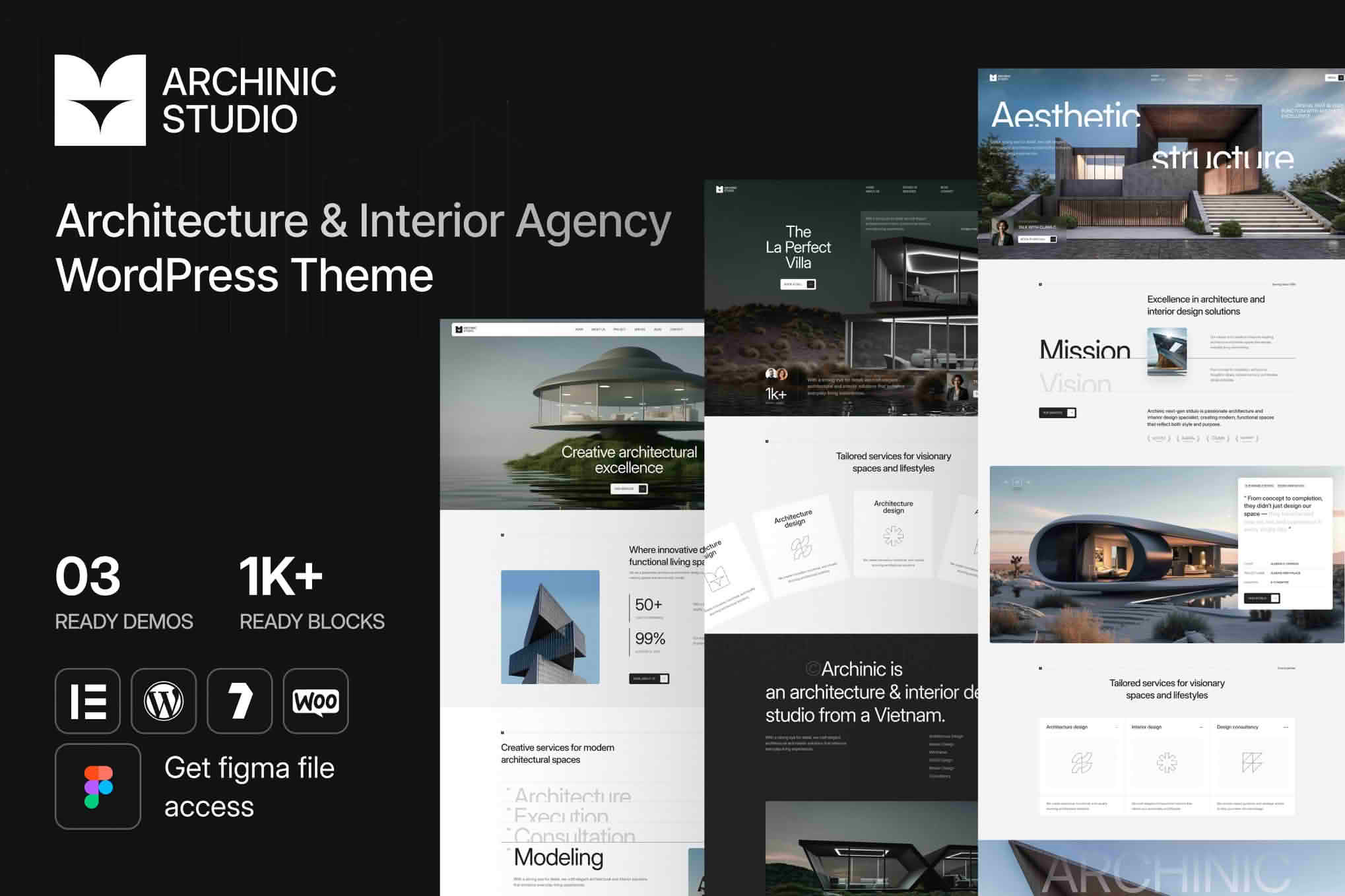
Archinic is a WordPress theme for architecture companies, interior and exterior designers, furniture makers and construction firms that want a polished, professional website. It is built around the Elementor page builder, so a studio can arrange its layouts visually, and it arrives with a large set of styled elements for showing projects, services and team members.
Design businesses are judged on imagery, layout and presentation, and a website is often the first place a prospective client sees their work. Archinic is set up for that reality. It suits architecture practices, interior and exterior design studios, furniture design businesses and construction companies, and it gives each of them a consistent visual system: generous imagery, clean grids and typography that stays out of the way of the work. The theme is fully responsive and retina ready, so project photography keeps its detail on laptops, tablets and phones alike.
A range of ready-made mega menus, headers and footers is included, and a header and footer builder lets each of them be adjusted to suit the business. Mega menus can carry images, icons and several columns of links, which helps a larger studio organize its services without overwhelming visitors. Sites that favor a single long page can use the built-in one-page navigation, which scrolls smoothly between sections and suits a practice that wants to tell its story from introduction to contact in one flow.
Sections, sliders and page headers can all take parallax or video backgrounds. A sticky menu stays on screen as visitors scroll, CSS3 animations add movement without heavy effects, and carousels give testimonials and recent projects room to breathe, while grid layouts show a larger portfolio at a glance.
Theme options control fonts and colors across the whole site, so headings and body text can be matched to a studio’s identity. Individual pages and posts can override those global settings when one project needs a look of its own.
An architecture practice can use Archinic to present completed buildings, ongoing commissions and the studio profile. The mega menu can group residential, commercial and interior services into one clear route through the site, while case studies sit in a portfolio grid with their details beside the images. The Team Member element introduces the designers, and the Counter and Process elements help set out the firm’s track record and how a commission moves from first meeting to handover.
Interior and exterior design specialists can use the same structure with different content. A furniture design business that sells pieces online can present its collections through the WooCommerce layouts, adding wishlist and quick view features through compatible plugins. Construction companies can use the Process element to explain how a job progresses, and a multilingual version of the site can serve clients in more than one country.
Archinic is built to work with Elementor, WooCommerce, WPML and Bootstrap. Contact Form 7 handles inquiry forms, and the theme is compatible with MC4WP for newsletter sign-ups and with Tidio Chat for live chat. For online shops, it is compatible with WPC Wishlist, WPC Quick View and Variation Swatches for WooCommerce, which extend how products are browsed and selected.
Because most layout work happens inside Elementor, changes can be made in the page builder without touching theme files. A child theme is included in the package, so custom code can be kept apart from the parent theme and preserved when the parent is updated.
Customization happens at several levels. Theme options control colors, fonts and site-wide behavior, page options handle one-off changes, and the Elementor editor adjusts individual sections. A studio can refresh its look repeatedly without writing code, and anyone who wants to go further has the child theme as a clean place for custom CSS, PHP or template changes.
Detailed documentation and video guides explain setup and customization step by step, which helps staff learn the layout and options at their own pace. The breadth of sections and demo layouts also means a firm can begin with something close to its needs and reshape it over time, rather than building every page from a blank canvas.


