

Updates for one year, unlimited sites, auto updates, and regular updates.
$3.99
 BookmarkBookmarked
 Gravity Forms is a premier form-building solution for the WordPress ecosystem, widely recognized for its robust architecture, extensive customization capabilities, and seamless integration with third-party services. Designed to handle everything from simple contact forms to complex data-collection workflows, it serves as a foundational tool for developers and site administrators who require reliability and scalability in their lead generation and user interaction processes.
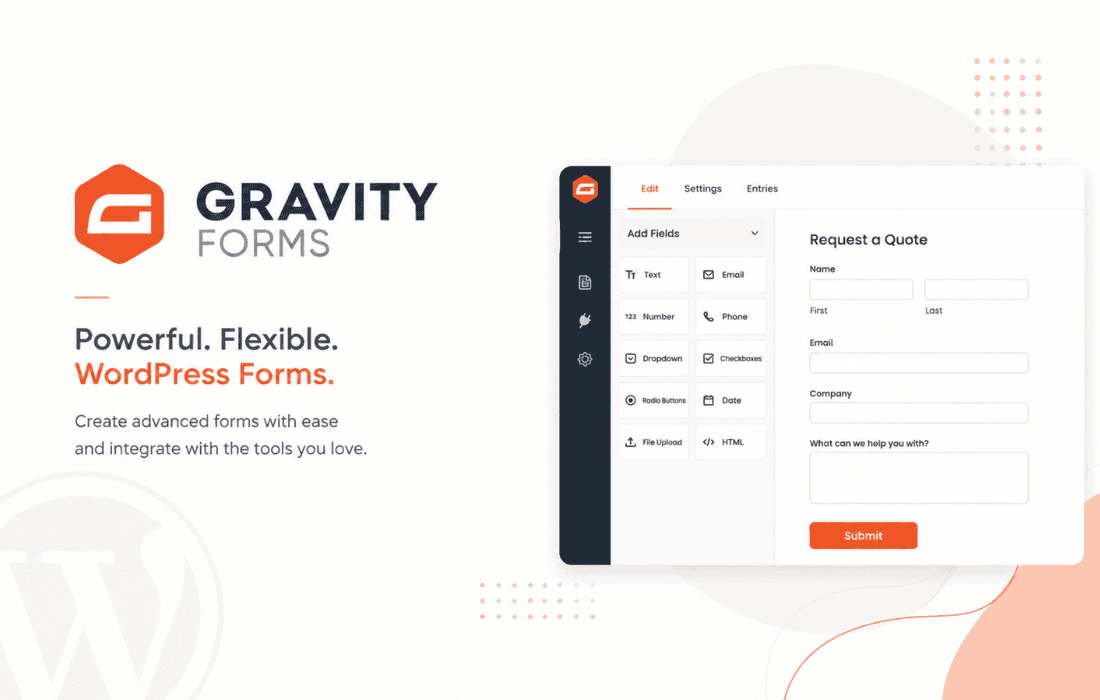
At its heart, Gravity Forms utilizes a drag-and-drop interface that allows users to construct sophisticated forms without needing to write custom code. The plugin provides a wide array of field types, including standard text inputs, checkboxes, radio buttons, and dropdown menus, as well as advanced fields such as file uploads, address blocks, date pickers, and hidden fields for tracking purposes. This modular approach ensures that users can build forms tailored to specific business requirements, whether they are creating simple feedback loops or intricate multi-page registration portals.
The plugin also features a powerful conditional logic engine. This allows form fields, sections, or entire pages to appear or disappear based on the user’s previous selections. By dynamically adjusting the form structure in real-time, administrators can ensure that users only see relevant questions, which significantly improves user experience and increases conversion rates by reducing form fatigue.
Gravity Forms excels in its ability to manage the data collected through its forms. Every submission is stored within the WordPress database, allowing administrators to view, edit, and export entries directly from the dashboard. This centralized management system simplifies the process of tracking leads, managing customer support tickets, or organizing event registrations.
Beyond basic storage, the plugin supports automated workflows through its notification and confirmation systems. Administrators can configure custom email notifications that trigger upon form submission, sending data to site owners or the users themselves. Confirmations can be customized to display specific messages, redirect users to a thank-you page, or even send them to an external URL, providing a professional touch to the post-submission experience.
One of the primary reasons for the widespread adoption of Gravity Forms is its extensive library of add-ons. These integrations allow the plugin to connect with a vast array of third-party services, including email marketing platforms, payment gateways, customer relationship management (CRM) software, and project management tools. By bridging the gap between WordPress and external business applications, Gravity Forms acts as a central hub for data synchronization.
For developers, the plugin offers a highly extensible API and a comprehensive set of hooks and filters. This allows for deep customization, enabling the creation of custom field types, unique validation rules, and specialized integrations that go beyond the standard feature set. The developer-friendly nature of the plugin ensures that it can be adapted to meet the needs of even the most complex enterprise-level projects.
Security is a paramount concern for any data-collection tool, and Gravity Forms addresses this through rigorous coding standards and regular updates. The plugin includes built-in features to help mitigate spam, such as honeypot fields and integration with reCAPTCHA. Furthermore, its architecture is designed to be compatible with a wide range of WordPress themes and other plugins, minimizing the risk of conflicts and ensuring a stable environment for critical business operations.
The plugin also supports accessibility standards, making it easier for site owners to create forms that are usable by individuals with disabilities. By adhering to best practices in web accessibility, Gravity Forms helps ensure that all users can interact with your site effectively, which is increasingly important for compliance and inclusivity.
The versatility of Gravity Forms makes it suitable for a diverse range of applications. Common use cases include:
While Gravity Forms is a comprehensive solution, there are other reputable options in the WordPress space depending on your specific needs:
In conclusion, Gravity Forms stands as a robust and reliable choice for any WordPress user looking to implement professional-grade data collection. Its combination of an intuitive interface, powerful conditional logic, and extensive integration ecosystem makes it a staple for businesses ranging from small blogs to large-scale enterprise platforms. By prioritizing both user experience and developer flexibility, it remains a top-tier solution for managing the flow of information on the web.


