

Updates for one year, unlimited sites, auto updates, and regular updates.
$3.99
 BookmarkBookmarked
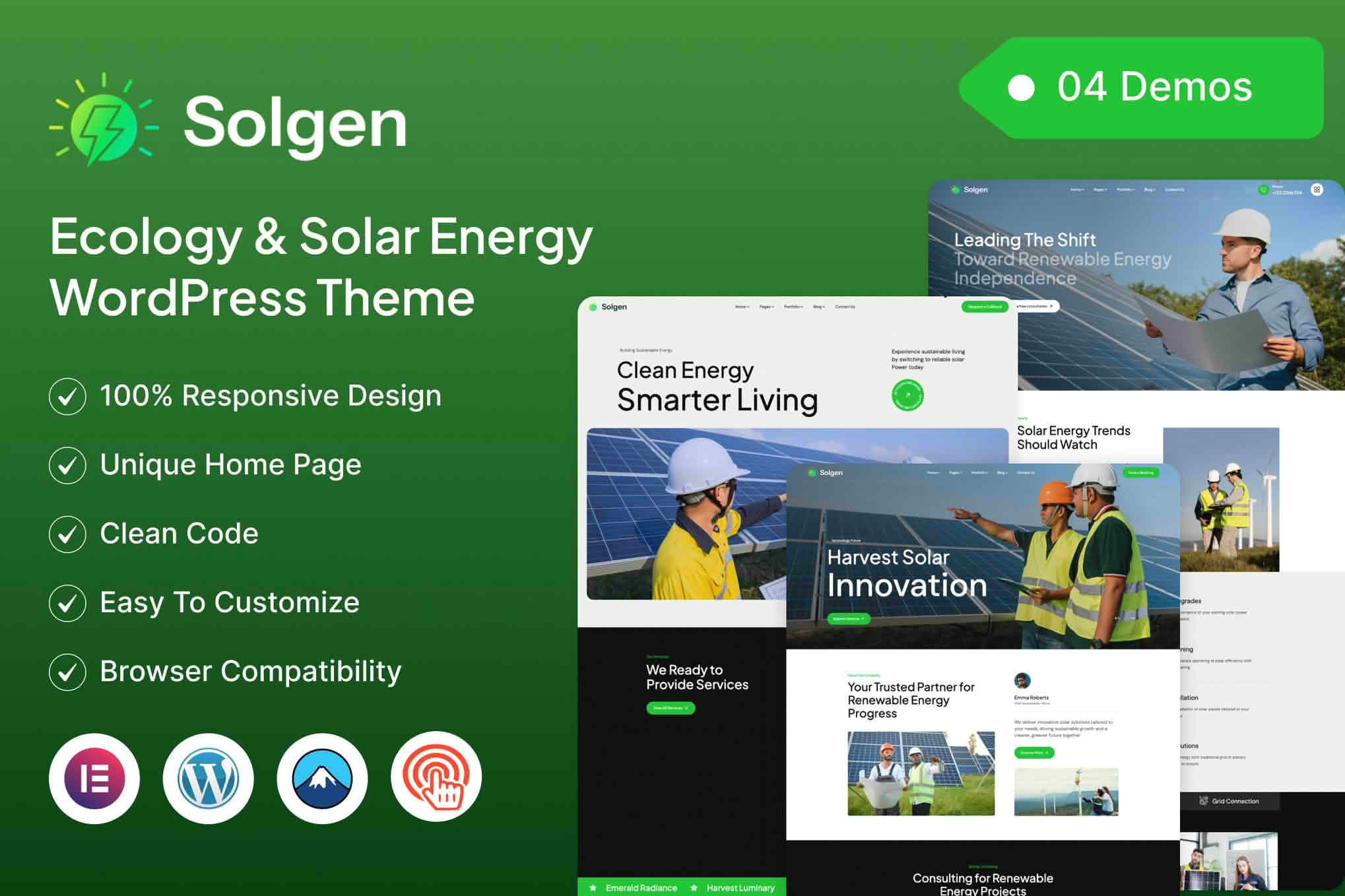
Solgen is a WordPress theme for solar energy companies, renewable energy providers, eco and sustainability organizations, and green tech startups. It pairs a modern, flexible layout with the Elementor page builder, so the look of the site can be shaped visually to suit a clean-energy or environmental brand.
Solgen is built for organizations whose work centers on renewable power and environmental responsibility. Its pages are arranged around services, portfolio work and team members, which suits a solar installer presenting completed projects, a sustainability group explaining its initiatives, or a corporate site in the renewable sector that needs a wider set of pages. It works equally well as a focused single-purpose site or as a multipurpose corporate presence.
The theme ships with six demo homepages, so you can begin with a layout close to the direction you want rather than a blank canvas. Three header layouts and three footer layouts are included, along with more than 25 inner pages. Headers come in several styles, including a sticky option that stays in view as visitors scroll. The blog has its own layout for articles and news, and two service layouts, three portfolio styles and two team layouts cover the most common ways of presenting a business. Every layout adapts to desktop, tablet and phone screens.
A solar installer can use the service and portfolio layouts to show finished installations alongside short explanations of each project. A renewable energy provider may lean on the corporate pages and team layouts to introduce its people and its approach. Environmental nonprofits and sustainability groups can use the blog and banner options to announce campaigns, events and progress reports. A green tech startup can launch from one of the homepage demos and add pages as the company grows.
Solgen works with Elementor and Elementor Pro, so visual editing covers most page-building tasks. The theme is also compatible with WooCommerce, Bootstrap and WPML. WooCommerce allows an online store to sit alongside the company website, and WPML makes multilingual versions of the site possible. The code is written in HTML, CSS, SASS and JavaScript, which gives developers familiar tools for extending it.
Most changes are made through Elementor and the theme options, so colors, menus, banners and page sections can be adjusted without editing code. A basic child theme is included for custom development, which keeps direct modifications separate from the parent theme’s files. Typography can be matched to a brand’s tone, with more than a thousand Google Fonts to choose from. Setting up the site follows a simple path: install the theme, run the one-click demo import, then customize the pages with Elementor and the theme options.


