

Updates for lifetime, unlimited sites, unlimited downloads, and regular updates.
$3.99
 BookmarkBookmarked
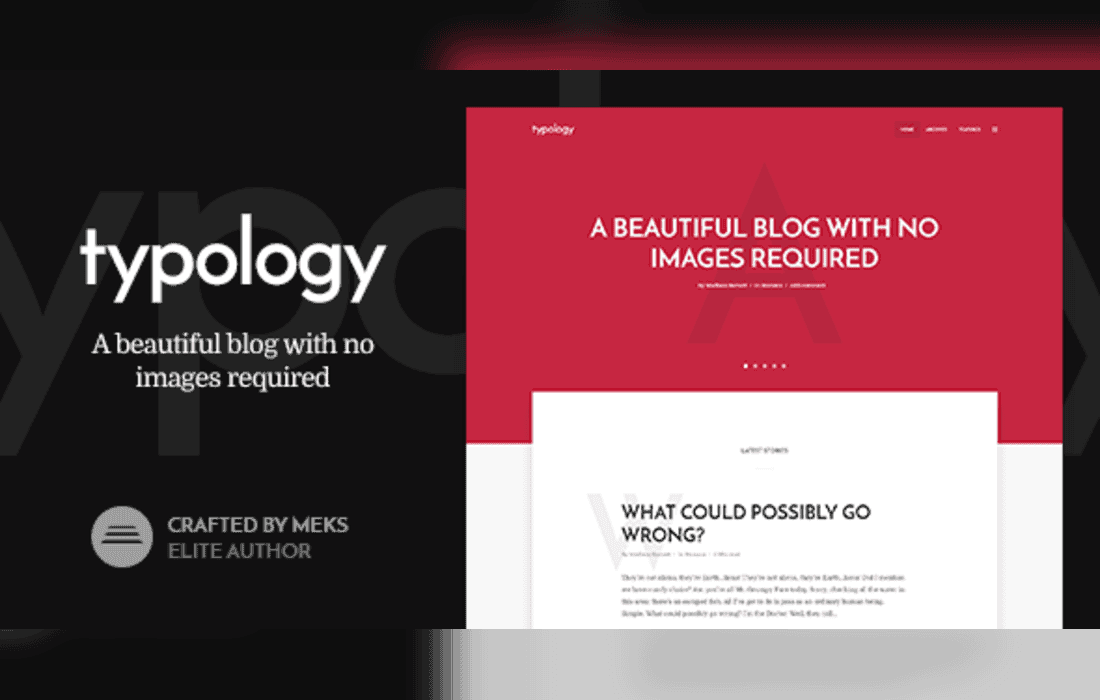
Typology is a minimalist, text based blog theme for WordPress, made for writers, book authors, poets and bloggers who want to publish without distraction. Its design rests on beautiful typography, so a site reads well with or without images.
Typology is designed for people who write first. The layout gives the words the main role, with type set carefully and few other elements competing for attention. Novelists, poets and book authors can present their writing on a clean homepage, and text-heavy blogs get a reading experience that stays calm and focused.
Tech bloggers, including coding and programming writers, will find the look well suited to long technical posts. Personal bloggers who prefer a minimalist style are also well served, since the theme does not depend on photographs.
The palette is built around one base colour, with several colour combinations available, so the look can be tuned without losing its character. Site owners can choose between a material-style and a flat appearance, depending on how much visual depth they want.
Typography is the main control. A range of fonts is available, and font size and letter spacing can be adjusted separately for body text and headings. The layout is responsive across desktops, tablets and phones.
The home page can include a cover area and an optional slider that rotates automatically. Several text-led post layouts are available, and individual posts and pages can override the global layout settings, so one article can look different from the rest of the site.
Writers who want a website for their work can use the text-led home page and minimal post layouts. Novelists sharing chapters, poets publishing verse and authors promoting a book all benefit from a layout where the words lead. The site reads more like a book than a magazine.
Tech and coding bloggers gain a clean, readable layout for long-form technical writing. Personal blogs that want a distraction-free look also suit the theme, and any site where the writing matters more than the images will feel at home with it.
Typology supports Gutenberg block styling and WooCommerce shop pages. Some features rely on companion plugins: custom widgets need the Typology Buddy plugin, and social sharing requires the Meks Easy Social Share plugin. The options panel depends on the Redux Framework plugin, which is installed separately.
Theme text can be translated from the options panel. Because widgets and social sharing are separate plugins, a site only adds the ones it actually uses.
The options panel handles logo and icon uploads, text translation, ad slot placement and pagination style. Custom CSS is added through the WordPress Customizer, so visual changes can be made without touching theme files.
Twelve shortcodes help editors add structure to articles, from pull quotes and highlights to tabs and accordions. Together with the typography controls, they give writers room to shape each page while keeping the minimalist style.


