

Updates for one year, unlimited sites, auto updates, and regular updates.
$3.99
 BookmarkBookmarked
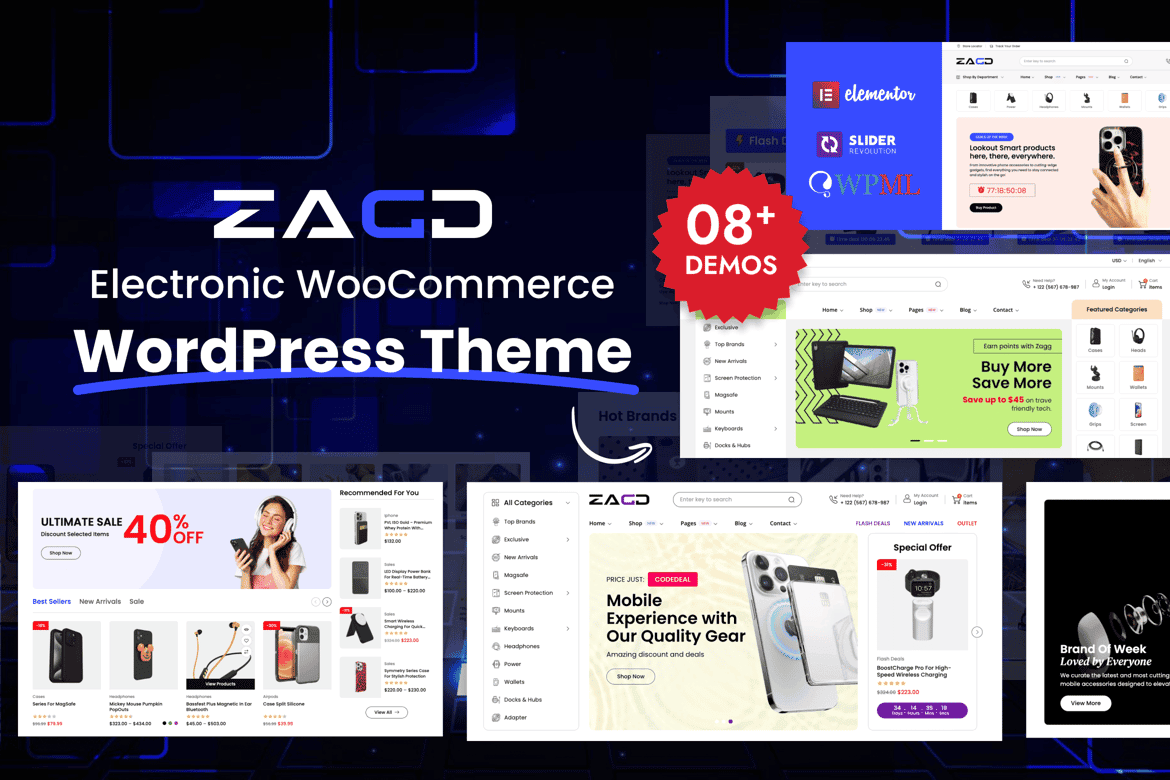
Zagg is a WooCommerce theme for electronics and accessories retailers. It pairs a modern minimalist look with Elementor-built homepages and AJAX shop filtering, so shoppers can find gadgets quickly on any screen size.
Zagg is designed for online shops selling consumer electronics and accessories. Its homepages are built with Elementor and its catalog runs on WooCommerce, so a store owner can present new arrivals and featured products in a sleek layout while keeping the range easy to browse. A demo import gives a new store a working starting point, which suits merchants who want a contemporary storefront without building every page from scratch.
The design is minimalist and modern, with six homepage layouts to choose from. Each homepage is assembled in Elementor’s drag-and-drop editor, so the main page can be reworked without coding knowledge. The layout is mobile responsive, and product grids and menus adapt from desktop to smartphone. A built-in mega menu organizes a large catalog into categories, and an Instagram feed section can bring social photos onto the page.
An independent retailer of phone accessories or smart devices can present its range in a product grid with filters, so shoppers narrow choices quickly. A seller with a deep category tree can rely on the mega menu to keep navigation clear. A brand with a small range of gadgets can use the Elementor homepage to showcase new releases with a slider and a short blog.
Zagg is built for WooCommerce and also works with Elementor and Bootstrap. The homepage is edited in Elementor, while the store uses WooCommerce’s product, cart and checkout features. Contact Form 7 handles inquiries, and Revolution Slider is available for homepage banners. Because the theme is responsive and works across major browsers, the storefront behaves consistently for most visitors.
The theme options panel gives control over the main visual settings, while Elementor allows homepage sections to be reordered and restyled. Since the blog accepts all default post types, editorial content can be added without extra configuration. The minimalist styling leaves room for a brand’s own colors and typography, so the store does not have to compete with a busy design. Small retailers can start from the demo and replace the sample content as they go.


