

Updates for lifetime, unlimited sites, unlimited downloads, and regular updates.
$3.99
 BookmarkBookmarked
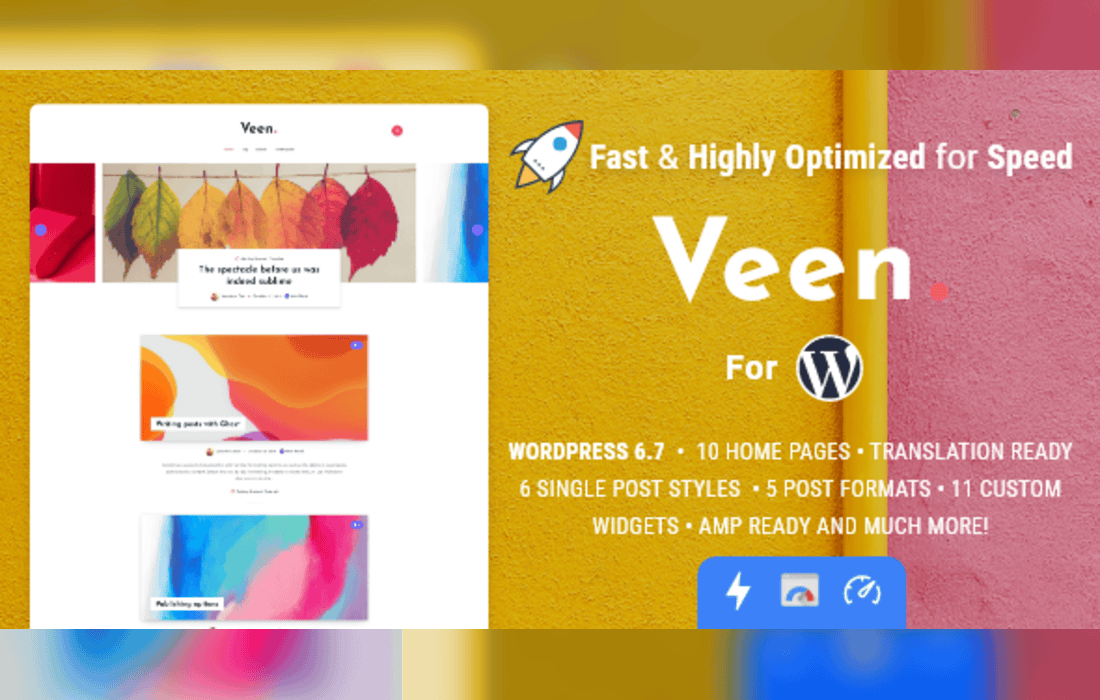
Veen is a minimal, lightweight blog theme for WordPress, built for speed and designed to work in AMP. It suits personal, photography, travel and biography blogs that want quick pages and a clean reading experience.
Veen is for bloggers who want a fast site with few distractions. Its code is minified and optimised, and lazy loading applies to post lists, post content and embedded videos and audio. Pages therefore load efficiently on phones and desktops alike. The theme is designed for high PageSpeed scores on desktop, although results also depend on hosting and content.
Veen works equally well for a personal journal, a photography blog, a travel diary or a biography. It is translation-ready, and English and Spanish translations are included.
The design is clean, minimal and responsive, with retina-ready displays and support for video embeds. It works on Android and iOS devices, and the reading layout is intended to stay comfortable on any screen.
Homepage modules include grid, classic, slider, carousel and category carousel options. Single posts come in three layouts: full width with sidebar, full width without sidebar, and classic, with the image placed inside the article. A no-sidebar style is available for posts and pages, and a sticky sidebar keeps widgets in view on posts. Dedicated templates cover tag, author and 404 pages.
Personal bloggers who write about daily life or hobbies can use Veen for a fast, uncluttered site. Photography blogs benefit from image-friendly post layouts, which place pictures inside the article or give them a full width treatment. Travel and biography blogs can use the same tools to present their writing.
Because the theme supports AMP, a blog that draws much of its traffic from mobile search can serve article pages in the AMP format for quick loading. Ad-supported blogs can use the ad placement options without crowding the reading experience.
Veen works with the WordPress block editor, Contact Form 7, Disqus and Facebook comments, and Open Graph tags for social sharing. Its AMP mode runs in transitional mode, so standard and AMP pages can sit side by side, and the AMP custom code field gives owners a place to add analytics.
The theme is lightweight, at roughly 1.5 MB, and it is minified, so it adds little weight to a site that is already built on WordPress.
The theme options panel sets up the site, chooses homepage modules, configures single post layouts and manages ad positions. Font icon and CSS loading can be adjusted, so the theme can be tuned for speed. Social profile links and the AMP custom code field give owners further control over the site.
The custom widgets can be placed in sidebars to show recent posts, categories or galleries, and the dedicated tag, author and 404 templates keep secondary pages consistent with the rest of the design.


